
Abstraction and Intimacy
The Language Ladder of Abstraction was developed by American linguist S. I. Hayakawa. The theory says that communication exists on a continuum between two extremes, abstraction and intimacy.
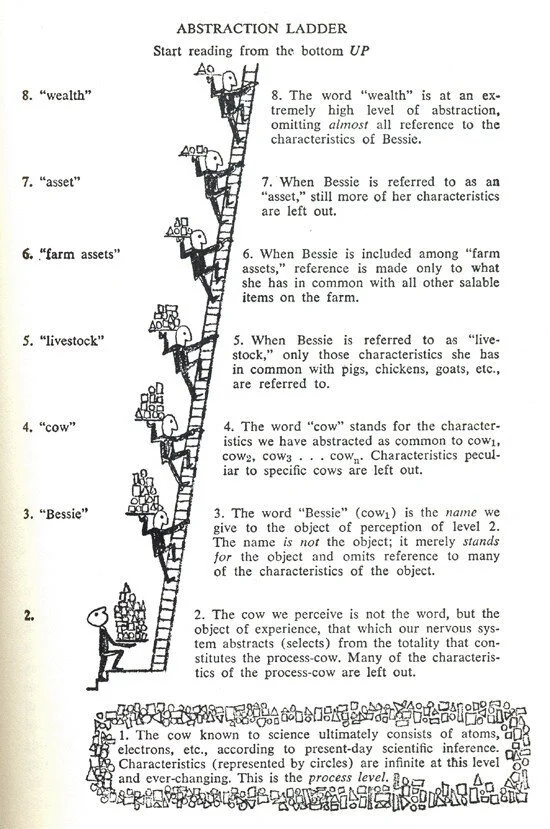
Ladder of Abstraction
In his 1939 book, the author uses the example of a cow, which we can experience any where from a specific named cow, Bessie, all the way to an abstract concept, a unit of wealth.
Abstract communication is how we scale our understanding, compare, and find patterns. It is how we make sense of the messiness that is reality.
Intimacy is what lets a fact land for a person. It is the difference between knowing something and feeling it.
The challenge with data is that it is further from intimacy than almost any other form of communication. Data is an abstract view of reality, which is powerful because it lets us find patterns and see things we couldn’t otherwise see.
Compare the impact in your mind of these two images:
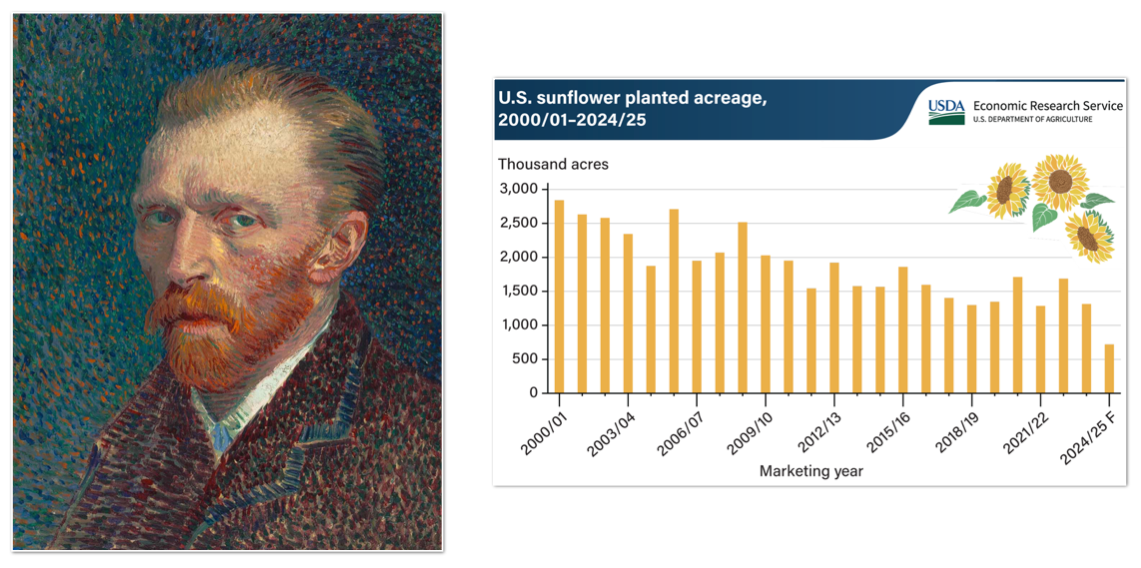
The bar chart requires a level of engagement and interpretation. The photograph of a person’s face hits immediately. It reaches you directly.
For those of us in the data game, the interpretation is second nature, so the abstraction doesn’t create friction. But for the people who don’t spent their time buried in spreadsheets, it can feel like a test.
Chip Heath and Karla Starr wrote a book called Making Numbers Count which is about the challenge of comprehending data. They share one particular example about the fact that most of the water in the world is undrinkable. The statistics can be hard to comprehend, but they become more accessible through a relatable example:
Before: Just 2.5% of the world’s water is unsalty, and over 99% of that is trapped in glaciers and snowfields. Only .025% of water is actually drinkable by humans and animals.
After: If the world’s water were put into a gallon jug, the humans would only be able to drink less than 20 drops of it (Starr and Heath, 58).
There are many clever techniques for helping people understand the numbers they are seeing. These are the things I have written about for years — intuitive visualizations, storytelling, comparisons, making numbers relatable, etc.
But as I mentioned in my previous post, I want to push past comprehension. You can understand a number perfectly and still feel nothing about it. Comprehension plus caring — that's much closer to the whole thing. Caring is what focuses scattered attention on this number, and what makes decoding an abstraction worth the effort.
Which has left me with an important question:
What needs to be in place for people to care about a number?
That is what I will explore next.