
5 Dos and 5 Don'ts for a ‘Year in Review’ Worth Sending
The concept is simple: take your customers' data, reflect it back as a personalized story, and watch engagement and retention improve. In practice, the distance between a Year in Review that delights people and one that quietly damages their perception of you is shorter than most organizations expect.
The Dos
1. Give their behavior a name.

Raw numbers tell people what they did. A label tells them who they are. Oura assigns members a health personality based on their biometric profile (Earth for resilience, Water for sleep, Fire for activity); Duolingo hands out designations like "World Champion" to its top learners. Knowing you're in the top one percent of an artist's Spotify listeners is more interesting than knowing you listened for 12,000 minutes. One is a fact. The other is a story about who you are.
2. Make the recipient the protagonist.
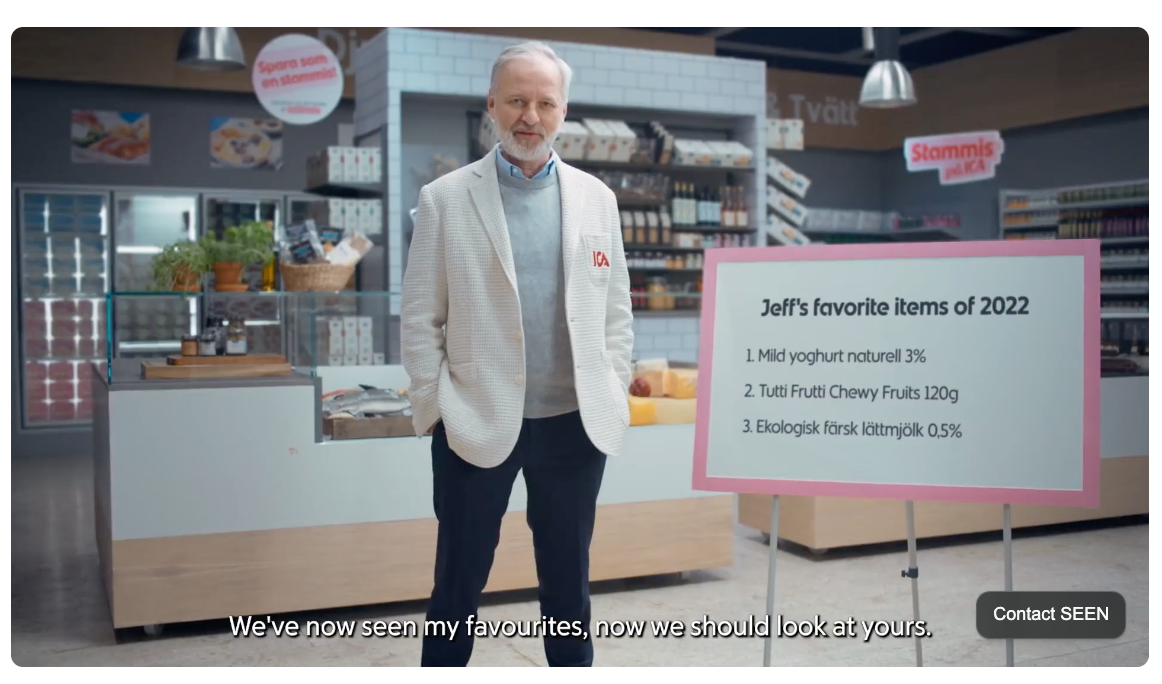
Every word should be written from the perspective of the person receiving it, not the organization sending it. "You saved $340 as a loyalty member this year" lands differently than "our members saved an average of $340."
ICA, Sweden's largest grocery retailer, sent two million personalized videos where a beloved advertising character addressed each customer by name, referenced their three most-visited stores, and called out their most-purchased products. One member's response: "My name, my stores, my products. Wow."
3. Make it interactive and delightful, not just informative.

A Year in Review is an experience, not a report. Spotify invites users to guess which artist they listened to most before revealing the answer; Duolingo builds in quiz elements and animated reveals.
These mechanics turn passive recipients into active participants, deepening the emotional connection to whatever comes next. Even in B2B, a single moment of surprise, a number the client didn't expect or a benchmark that reframes their results, works on the same principle. Delight doesn't require a game. It requires making someone feel something they didn't anticipate.
4. Design the shareability to fit the context.
Shareability matters everywhere, but the form varies significantly. In B2C, it's a visual card for Instagram. In B2B, it's forwarding to a manager, presenting to a leadership team, or dropping a link in Slack. A Year in Review that helps a client bring proof of ROI to their CFO before renewal is doing serious strategic work, but only if it's designed to travel upward, not just be consumed. Think about where it goes after it's opened, and design for that second audience.
5. Use data that could only be about this person.
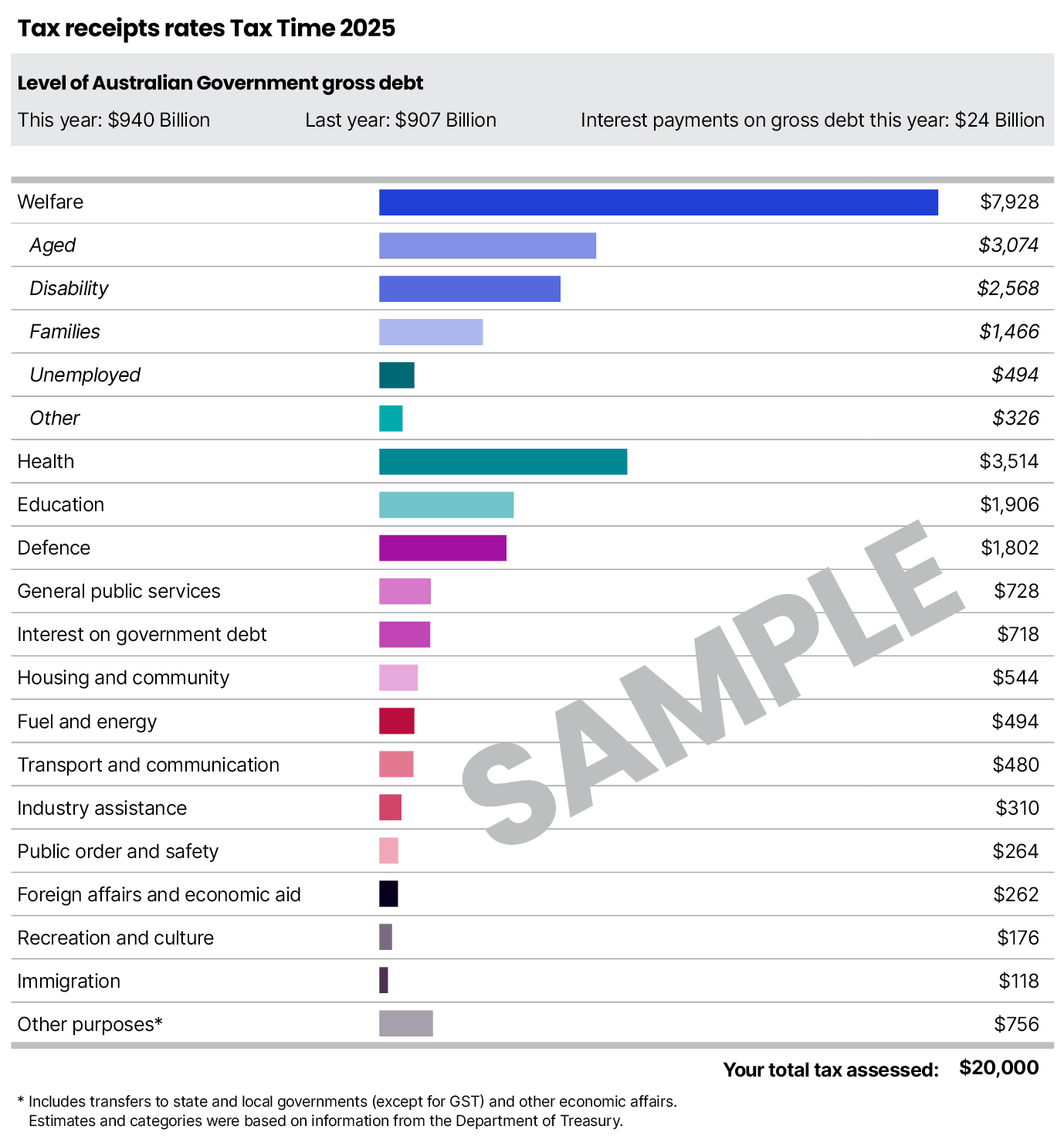
Australian tax receipt
The test for real personalization is simple: could this content have been sent to anyone else? Charity: Water sends donors GPS coordinates and photos of the specific water project their contribution funded, not an aggregate impact report. The Australian Tax Office tells each taxpayer exactly how their dollars were allocated across government spending categories. None of these could reach the wrong person and still make sense. That specificity is the mechanism. Everything else is decoration.
Bonus: Measure engagement, not just delivery.
Knowing someone opened your year in review is table stakes. The more useful questions are: which insights did they spend time on, which ones prompted them to share, and where did they drop off? Tracking at that level tells you whether you built something that genuinely intrigued people or just something that got clicked.
Furthermore, you want to design the narrative with clear actions in mind — a benchmark to share with their team, a finding worth forwarding to leadership — and then watch whether those moments actually land. The goal is to moves people to do something prompted by the YiR experience.
The Don'ts
1. Don't hand production over entirely to AI.
AI is genuinely useful for generating personalized narratives. It's not a substitute for editorial judgment. YouTube Music's 2024 and 2025 recaps drew sharp criticism for feeling generated rather than crafted, inaccurate in their classifications, and insulting in their personality assessments — what users now call "AI slop." When a Year in Review makes someone feel processed rather than seen, it achieves the opposite of its purpose. Use AI to prototype; keep humans in the loop to protect quality and messaging.
2. Don't force a celebratory tone on a complicated year.

"What a year!" is the wrong opening line for a customer whose key metrics declined, a student who struggled, or a donor whose funded project hit delays. Unearned celebration is its own form of inaccuracy, and recipients feel the gap between the narrative and their reality.
The better approach: acknowledge what happened, provide context where it helps, and find the genuine progress, however modest, worth recognizing. A Year in Review that tells a hard truth well builds more trust than one that papers over it with enthusiasm.
3. Don't mistake a mail merge for personalization.
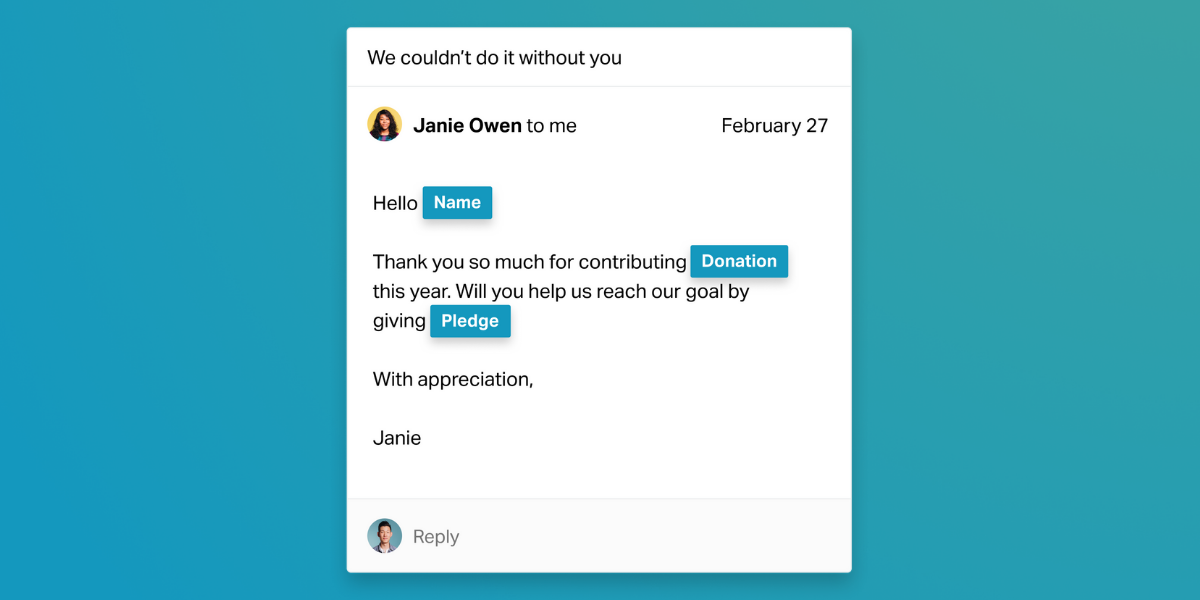
A name in the subject line and generic content underneath isn't a year in review. It's the appearance of one. The telltale sign: content that would make equal sense sent to anyone in the same customer segment. Organizations that confuse the two often conclude that Year in Reviews don't drive engagement, when the actual problem is they never sent a real one.
4. Don't underestimate the delivery problem.
A great year in review accomplishes nothing if it arrives from an address the recipient doesn't recognize, in a platform they haven't opened in months, at a moment when they're not thinking about your relationship.
Delivery is as important as content, and it's where many well-intentioned efforts quietly fail. Send from a name they know, in the channel where they actually operate, and time it before renewal conversations. A Year in Review sitting unopened in an inbox is indistinguishable from one that was never sent.
5. Don't ignore sparse or missing data.
Some customers won't have enough activity to populate a data point, and some joined mid-year. If you don't anticipate these gaps in advance, you'll ship an experience that feels broken for a meaningful portion of your audience, which is worse than not sending anything. The fix is building graceful fallbacks into every data point before launch: alternative content for thin data, honest framing for partial-year results, suppression logic for metrics that genuinely don't apply. This is unglamorous work. It's also the difference between a campaign that holds up at scale and one that generates support tickets.

Done well, a Year in Review is one of the most effective customer communications you can send.
Done poorly, it confirms to customers that you don't actually know them.
The gap between the two isn't a technology problem. It's a craft problem, one that requires as much attention to tone, timing, and fallback logic as it does to data and design.
At Juice, that's exactly what Forward was built to solve.