Memorable or Actionable or Both.

Recently, I saw the largest concentration of iPad users in the world, controlled a computer screen with my eyes, and learned about our looming robotic future. No, Apple doesn't have a technology lab on the moon, but I did attend CHI 2010 (short for Computer Human Interaction - the entire program along with papers and authors are referenced here). I left with a bit bigger toolkit and plenty of research to consider further. One such effort investigating chart junk has been reviewed by EagerEyes' Robert Kosara. I share his enthusiasm for research in visualization, but let's look more closely at some issues the paper raises and consider how these findings fit into the goals of visualization.

Nothing gets information visualization designers' feathers more ruffled than the thought of junky charts being more desirable than "Tufte-compliant" charts. I was skeptical, to say the least, in attending a presentation by Scott Bateman for a paper entitled, Useful Junk? The Effects of Visual Embellishment on Comprehension and Memorability of Charts. (The title is a bit misleading in that the paper is really about embellishments and illustration - not so much traditionally poor structural graphics often considered common "chart junk.")

(Example of embellished vs. plain chart with same data, from the paper) Embellished vs. Plain chart

The aesthetic treatment of data presentation is a long-time debate, and Scott came all the way from Canada to answer the question: Should we use chart junk? The answer is an emphatic "maybe." The goal of the study was to look at interpretation accuracy and long-term recall, and the papers says,

our results question some of the premises of the minimalist approach to chart design.

Make charts Memorable.

Skipping the gritty details of the study, here are the findings of a provoking illustration with data embedded compared to an boring, "plain" chart:

  • more memorable over the long-term;
  • perceived as having more value and sense of chart bias; and
  • most enjoyable and easiest to remember.

More memorable is better, right? The question we should be asking is, better than what. Of course, more memorable is better than less memorable, but at what cost? And what do we really want people to remember? It's doubtful the best way to drum up interest in data is by making it light up and do a dance to feed the public's already marketing heavy information diet.

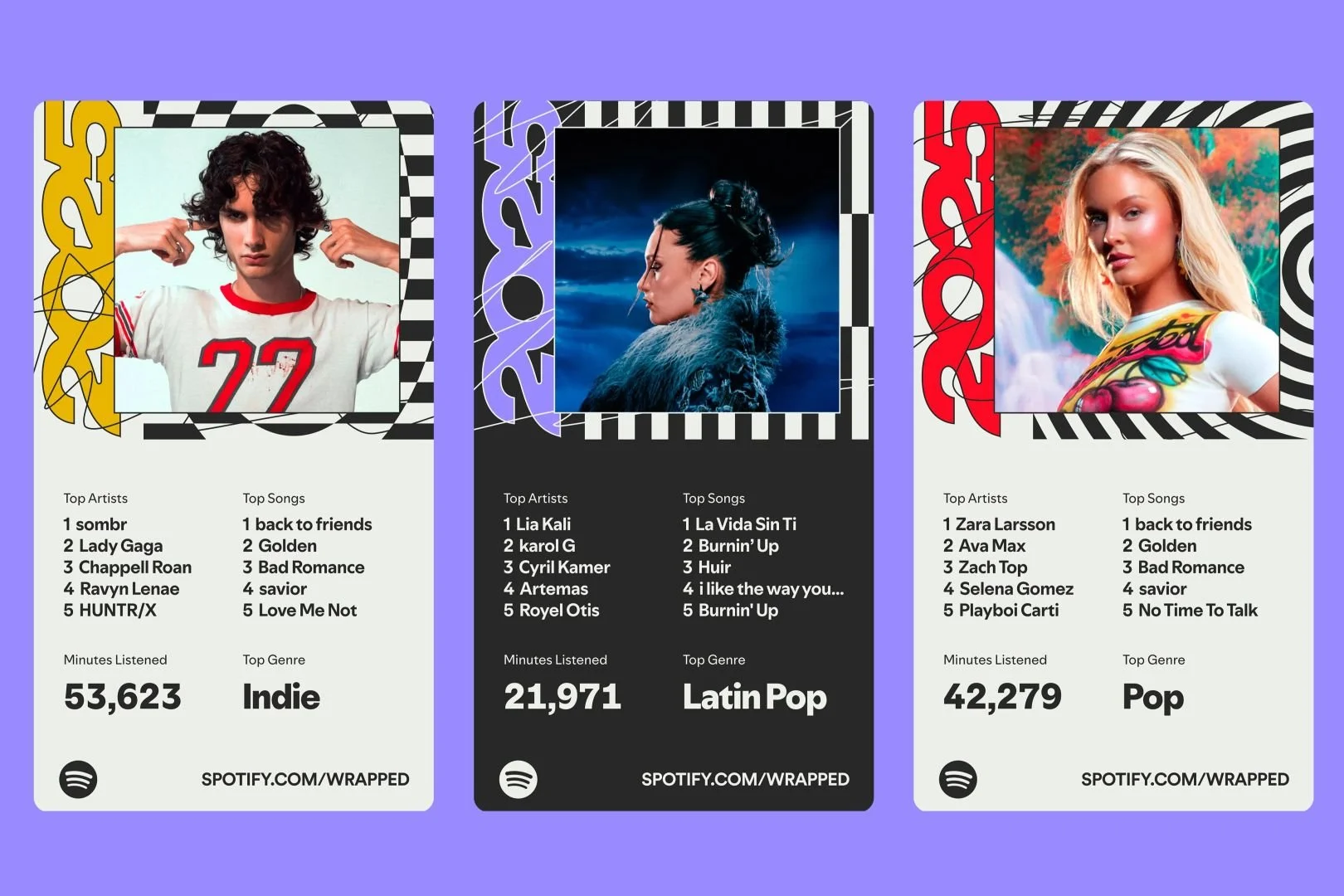
Your data as is mostly marketing if it looks like this: GOOD.is | The Richest and Poorest NeighborhoodsGOOD.is | The Richest and Poorest Neighborhoods

Fully embellished charts Pros Cons
Graphics and illustration heavy Draws attention, memorable imagery It looks and feels glossy so people will treat it with the bias of a magazine or commercial TV ad
Little data depth Little analytical thinking needed, wider audience Non conclusive, likely not actionable
Endless diversity Creative exploration Few standards, wild chart organization
Production costs Little research, relatively cheap Illustration / Graphic artist talent required

Perhaps one's attention is more likely to be drawn to these embellished charts if they are engaged in an entertaining or passive ritual, like watching TV, browsing the web, or shuffling through a newspaper. Perhaps they get the same personal impact as the funny pages. We should consider a greater sense of bias or value message is introduced through this style of data presentation (as confirmed by the study), and that can be detrimental to a viewer's trust. It isn't that imagery doesn't have a place in the same conversation with data, but there are better ways to go about drawing attention than applying illustrations to data points.

In the data presentation arena, we definitely want data to be memorable, but even more so we want data to be actionable; therefore, valuable data remains the attraction.

Make charts Actionable.

0% Would you say this graphic is more or less plain than the example "plain" chart taken from the research paper earlier in the post? Would you say its more or less actionable? 

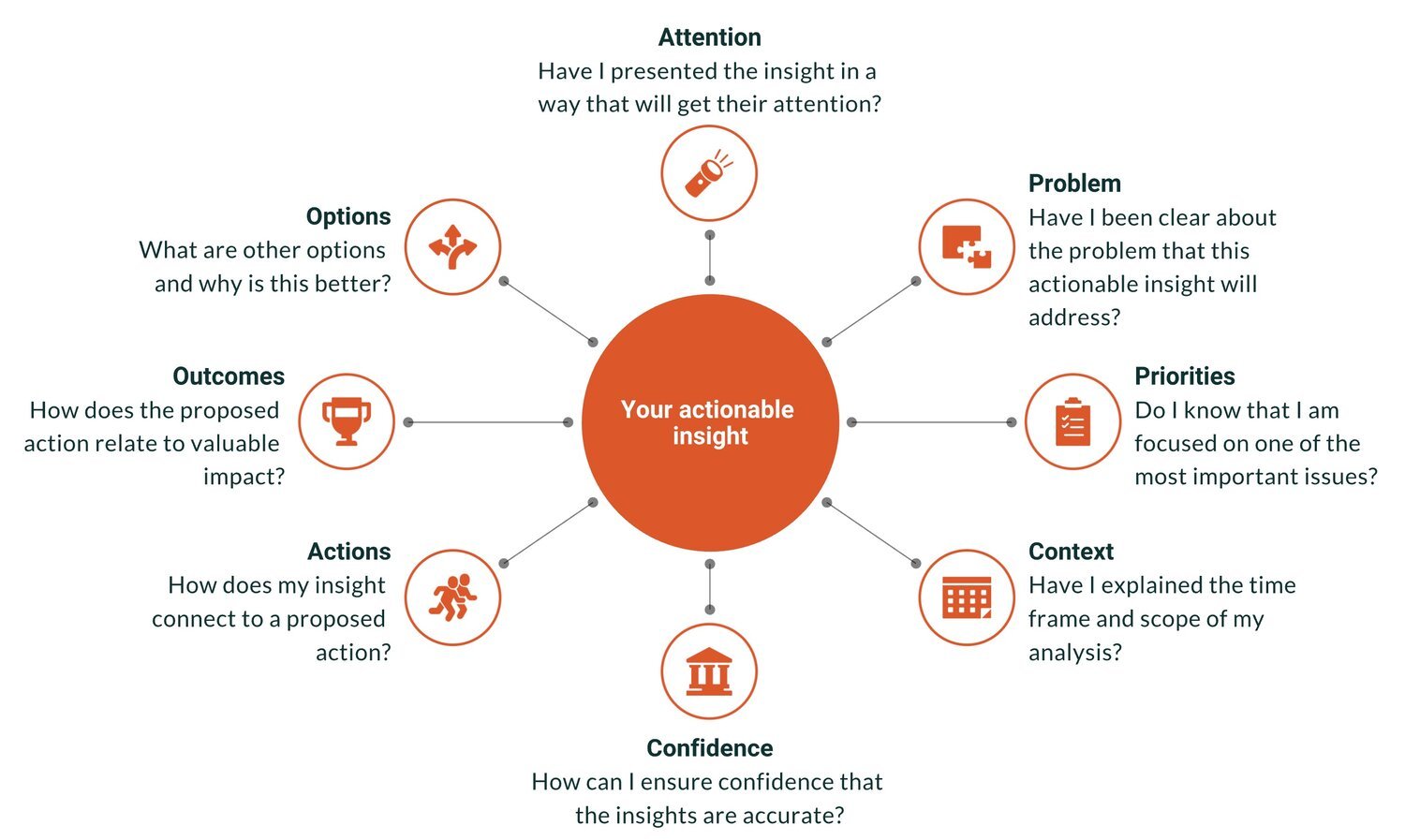
A chart is actionable if it answers enough questions of its viewer to instigate a meaningful decision or reaction to information presented. Therefore, charts are only actionable when the right information is presented to the right people with the right visual communication. 

Edward Tufte describes the use of this graphic by the New York Times that accompanied a data dense table along with a news column on the subject. It's a simple point: in order to present meaningful, compelling, or personally motivating information, there either needs to be exactly the right data presented, given the context of the data and person, or enough dimensions and slices of data to be meaningful to a broader range of questions and needs. Supporting textual content always helps to tell the story, which builds the viewers mental model - thereby, making the data more understandable.

Non-embellished charts Pros Cons
No non-data graphics Minimized distractions from data focus, no graphics or imagery suggesting bias, Teachable, fundamental guidelines little visual appeal unless the data density is high (which can feel overwhelming)
Sufficient data-depth emphasis Actionable information Requires more patience or experience from viewer.
Production costs No illustration talent required Research time and resources required, relatively expensive

The problem with embellishments as a primary style for getting the public engaged with data is that it continues to suggest that truly understanding how data impacts their world is beyond common thought or interest. The dimensions are minimal and value statements dominate.

But value statements aren't always bad. Sometimes when you're saying so little with an information-starved chart, its better to come out and say the point you're trying to make with a single data point. Like this beautiful example from goingtorain.com

goingtorain.com

Its Communications 101: say what you're going to say, say it, and say what you said. When the information is somewhat clearly target and not exploratory in nature, this frank approach is often more effective. Embellished charts commonly stand alone with no supporting, meaningful story or conclusion. If the information is valid and valuable enough to be published, there should at least be enough effort to find and integrate a reliable source with more info to answer questions where the chart data left the viewer wondering.

Make charts Both.

When it comes to complicated information, stop treating it as if it can be polished nicely into a single chart and that will be sufficient to create understanding, motivation, and action. Charts make data visible and play off our innate human need to create a mental image of the information story we're presented with. We need both visual attraction / definition and concrete factual data.

Illustration, graphics, and photography trigger emotion and interest in our right brain. They give us a chance to associate ideas and create mental connections to make sense of the world. Our right brain needs "embellishment" thinking to make connections.

Meanwhile, our left brain needs values, raw facts, and the ability to measure worth. Our left brain needs "plain chart" thinking to determine the cause and effect of connections; its interested in thinking about what really matters and impacts things at this moment.

There are few visualizations that even begin to approach the balance between imagery and data.

Example 1. The Tweet Tracker visualization is at least on the right track. One may say here that illustration is used as data points, but I would suggest the technique is appropriate here because the imagery is uniquely matched, within context, as another dimension to its data category.

Winter Olympics Tweet Tracker by Stamen. Winter Olympics Tweet Tracker by Stamen.

Example 2. Embellishments come in diverse forms. You may have seen this presentation Al Gore gave on global warming. Notice what happens at 9:08 in the video as Al continues his commentary while riding a lift on stage up the side of the chart. Do you hear the background laughter? This kind of laughter is good. You know you're audience is engaged. Duarte Design designed an embellished visual here to grab people's attention and make the point memorable - alongside the data chart. This engaging visual device makes the data more memorable because the data is still the center of attention.

Visualization is simply the best language to create meaningful connections between data, thereby making it valuable. All charts are related to visualization, whether its good design or not. The conversation of whether embellishments are good or bad depends on many things, but the real question we should be asking is whether they are making your data more or less valuable. It is a fine thing to attract interest to data, but not when that is a device to overlook the real care needed in preparing sufficient information. Plain charts are fine also, but likely only for quick personal projects in excel where a mental model of the data connections are already well understood.

I'm thankful for Scott's work with his colleagues on this research, and for people like Robert who also promote appreciation for the much needed research in visualization. The theme of graphical embellishment is thrown around so much in the visualization community that it rarely receives careful deliberation, and this paper starts a purposeful conversation. However, there is a long way in working towards conclusive goals.

Other visualization related papers presented at CHI 2010:

  • Useful Junk? The Effects of Visual Embellsihment on Comprehension and Memorability of Charts.
  • ManyNets: An Interface for Multiple Network Analysis and Visualization
  • Individual Models of Color Differentiation to Improve Interpretability of Information Visualization
  • High-Precision Magnification Lenses
  • Crowdsourcing Graphical Perception: Using Mechanical Turk to Assess Visualization Design
  • Integrating Text with Video and 3D Graphics: The Effects of Text Drawing Styles on Text Readability
  • Animated UI Transitions and Perception of Time – a User Study on Animated Effects on a Mobile Screen
This work is licensed under a Creative Commons Attribution-Noncommercial-Share Alike 3.0 United States License. All source code is released under a BSD License unless otherwise specified.

0 comments | Add a comment

Your name

Email (optional, will not be shared)

Type the word "juice" (required to confuse the spammers)

Your comment


Better Know a Visualization: Parallel Coordinates

(With enough visualization methods to warrant a periodic table, it can be confusing to know what to use and when—and which visualizations are even worth considering at all. This series of posts is intended to introduce you to the visualization approaches that we find most useful, practical, and audience-friendly.)

What is a parallel coordinates chart?

Parallel coordinates is a visualization technique used to plot individual data elements across many dimensions. Each of the dimensions corresponds to a vertical axis and each data element is displayed as a series of connected points along the dimensions/axes.

Jon Peltier's chart of baseball players below offers a simple example.

Peltier parallel coordinates

Each line corresponds to a player with performance plotted across four characteristics. Two players have been highlighted to compared values.

Parallel coordinates was invented by Alfred Inselberg in the 1970s as a way to visualize high-dimensional data. These charts are more often found in academic and scientific communities than in business and consumer data visualizations. This isn't too surprising as parallel coordinate charts can become very dense and difficult to comprehend. Stephen Few has a typical reaction (PDF):

The first time that I saw a parallel coordinates visualization, I almost laughed out loud. My initial impression was "How absurd!" I couldn't imagine how anyone could make sense of the dense clutter caused by hundreds of overlapping lines. This certainly isn't a chart that you would present to the board of directors or place on your Web site for the general public. In fact, the strength of parallel coordinates isn't in their ability to communicate some truth in the data to others, but rather in their ability to bring meaningful multivariate patterns and comparisons to light when used interactively for analysis.

Mr. Few's final point is right on: with the application of interactive highlighting, filtering, and roll-over detail, parallel coordinate charts can reveal interesting stories in your data.

What problem does this solve?

For most standard charts, there are only so many dimensions you can effectively show. A typical progression of charts by dimensions goes like this:

Dimensions Chart type
2 Scatterplot
3 Bubble chart
4 Bubble chart with colors
5 Bubble chart with colors and animation

And now you've pretty much made an indecipherable graphic. That's where parallel coordinates can help in showing many dimensions, limited only by horizontal space.

Like all good visualizations, parallel coordinates can also show both the forest and the tree. The big picture can be seen in the patterns of lines; individual lines can be highlighted to see detailed performance of specific data elements.

What to watch out for when using parallel coordinates?

With its power to visualize multi-dimensional data, why aren't parallel coordinate chart more popular? Here are a few of the issues:

  • Large data sets create a lot of visual clutter. More from S. Few: "Most of us who have used parallel coordinates to explore and analyze multivariate data would agree that meaningful patterns can be obscured in a clutter of lines, especially with large data sets."
  • The order of the axes impacts how the reader understands the data. Relationships between adjacent dimensions are easier to perceive than between non-adjacent dimensions.
  • As the axes get closer to each other it becomes more difficult to perceive structure or clusters.
  • Depending on the data, each axis can have a different scale, which is difficult to display and for the reader to absorb.
  • Lines may be mistaken for trends or change in values even thought they are only used to show the connected relationship of points.
  • Then there is stuff like the following that can give the visualization technique a bad name: Ugly parallel coordinates

Parallel coordinates in practice

Protovis: In this example, hundreds of cars can be quickly compared by filtering along any dimension. Click and drag along the red rule for a given dimension to update the filter. Protovis parallel coordinates

Junk Charts revised a New York Times graphic to come up with this take on a parallel coordinates chart: Junk Charts parallel coordinates

Advisor Solutions's Parabox solution goes beyond the parallel coordinate lines to also show information about the distribution of values by dimension. Parabox parallel coordinates


Do it yourself in Excel

Do it yourself with other tools

  • Macrofocus uses parallel coordinate visualizations extensively in their products (InfoScope, SurveyVisualizer)
  • "GGobi is an open source visualization program for exploring high-dimensional data"
  • "FluxViz is a simple cross-platform tool that uses parallel coordinates for the visualization of high-dimensional spaces"

More resources

This work is licensed under a Creative Commons Attribution-Noncommercial-Share Alike 3.0 United States License. All source code is released under a BSD License unless otherwise specified.

4 comments


April 27, 2010
Robert Kosara said:

There is a lot more to Parallel Coordinates than that. You're right with your criticism, but you don't show how this can be used for a lot of data sets where you want to sort through lots of dimensions to find patterns. There's also still a dozen or so new papers every year on refinements and new things based on ParCoords (and not just the 3D nonsense you showed). There are limitations of course (just like with any other technique), but there are a lot more uses than you give the technique credit for.

Also, your last two examples don't have much to do with Parallel Coordinates: the point is to be able to see which points on the different axes belong together. You can't do that with these charts.


April 27, 2010
Zach said:

Robert, Can you share some of the other uses you mentioned?


April 29, 2010
Robert Kosara said:

I was actually planning an article for my website on that topic, I'll let you know when it's up ... should be next week.


May 13, 2010
Robert Kosara said:

Okay, this took a bit longer than expected, but here it is: http://eagereyes.org/techniques/parallel-coordinates

It's a basic intro at this point, but I intend to write a bit more about more current work with parallel coordinates in the next month or so.

Your name

Email (optional, will not be shared)

Type the word "juice" (required to confuse the spammers)

Your comment


Add a comment


Better Know a Visualization: Small Multiples

(With enough visualization methods to warrant a periodic table, it can be confusing to know what to use and when—and which visualizations are even worth considering at all. This series of posts is intended to introduce you to the visualization approaches that we find most useful, practical, and audience-friendly.)

Small multiples maps

What is a small multiple?

Small multiples are a visualization concept introduced by Edward Tufte. He described them as:

"Illustrations of postage-stamp size are indexed by category or a label, sequenced over time like the frames of a movie, or ordered by a quantitative variable not used in the single image itself."

In other words, small multiples use the same basic graphic or chart to display difference slices of a data set. Small multiples can show rich, multi-dimensional data without trying to cram all that information into a single, overly-complex chart. Small multiples go by many names, including Trellis Chart, Lattice Chart, Grid Chart, and Panel Chart. I would even argue that sparklines are a simpler, smaller cousin of small multiples.

What problem does this solve?

Small multiples offer a few valuable features:

  1. They allow for the display of many variables with less risk of confusing your audience. Trying to display three or more variables in a single chart is a challenge Stephen Few calls overplotting (PDF).
  2. The reader can quickly learn to read an individual chart and apply this knowledge as they scan the rest of the charts. This shifts the reader's effort from understanding how the chart works to what the data says. That's a worthy goal in all data presentation.
  3. Small multiples enable comparison across variables and reveal the range of potential patterns in the charts.

What to watch out for when using small multiples?

Like any visualization, there are many ways to mess up and undermine the value of the data presentation:

  • Placement of the small multiples charts should reflect some logical order, e.g. dimensional matrix, geography, or time. This helps the user quickly find the charts that are interesting to them.
  • Small multiples should share the same measures, scales, size, and shape. Changing one of these factors undermines ability for people to re-use their understanding of the chart.
  • Simplicity of the chart is critical. Users should be able to process information across many of these charts. The following small chart from the New York Times works as an individual graphic; when shown in "postage stamp" size across 20 cities, this chart is too data-dense.

Small multiples


Small multiples in the practice

Trilogy Meter by Dan Meth shows movie enjoyment by sequel. Small multiples

Andrew Gelman's analysis of public support for vouchers, broken down by religion/ethnicity, income, and state.

Small multiples maps

Jorge Camoes' small multiple graphic for unemployment data

Small multiples


Do it yourself in Excel

  • Jon Peltier creates small multiples in Excel
  • Kelly O'Day offers numerous tutorials and example workbooks on how to create "Panel charts" in Excel
  • Juice provides a few Excel tricks for replicating a chart across a data set

Do it yours with other free tools

  • Tableau Public. Nobody has small multiples more baked into their DNA than the folks at Tableau.
  • Many Eyes for map-based small multiples.

More resources

This work is licensed under a Creative Commons Attribution-Noncommercial-Share Alike 3.0 United States License. All source code is released under a BSD License unless otherwise specified.

0 comments | Add a comment

Your name

Email (optional, will not be shared)

Type the word "juice" (required to confuse the spammers)

Your comment