Experimenting with new presentation styles
By Zach Gemignani
October 31, 2005
Find more about:
powerpoint
presentations
Like a lot of folks, I was inspired by Dick Hardt's presentation in the Lessig style. It was my first introduction to this fast-paced, minimalist approach – and far cry from the denser presentation style I usually use.
I probably wasn’t alone in thinking: I could do that with my next presentation and bask in the glow of my audience’s admiration. Stephen O’Grady at Red Monk seized the opportunity and put together a great example of a Lessig-style presentation here. At Juice, we're always looking for new and better ways of communicating with our clients and have been paring down the visual complexity of our presentations recently. After trying this approach with my last couple client presentations, I thought I’d share a few thoughts on my experience:
- A Ying to the prevailing Yang. The dominant style of presenting, the one that Cliff Atkinson tenaciously rails against, can be best identified by its long lists of bullets and mind-numbing detail. The Lessig/Hardt camp offers a diametrically-opposed alternative – one that requires the presenter to focus on the flow of the story. Trying this approach was a great reminder that you should be telling a compelling story, first and foremost. It also asks you to breaks the ingrained habit of throwing everything you know on each slide.
- Dazed and confused. From my experience, you have to be careful not leave your audience in a Roadrunner-esque cloud of dust. The Lessig/Hardt style starts off fast and doesn’t slow down. Particularly if you are well known to your audience, there is an implicit contract between you and your audience. The audience has expectations about your communication style and it is jarring to them when you change. On the other hand, if you bring the skill and commitment of a Dick Hardt, the audience is likely to recover from the initial shock and quickly get into the flow of the presentation.
- Be your own stylist. All of which made me wonder: Is the value in Dick Hardt’s presentation popularity in asking us to reconsider how we present information – rather than suggesting we simply copy his approach? There isn’t one right style for playing a song, making a movie, or writing a book – why do so many presentations look alike? Some would blame it on the tool (i.e. PowerPoint), but I think it stems from basic corporate conservatism.
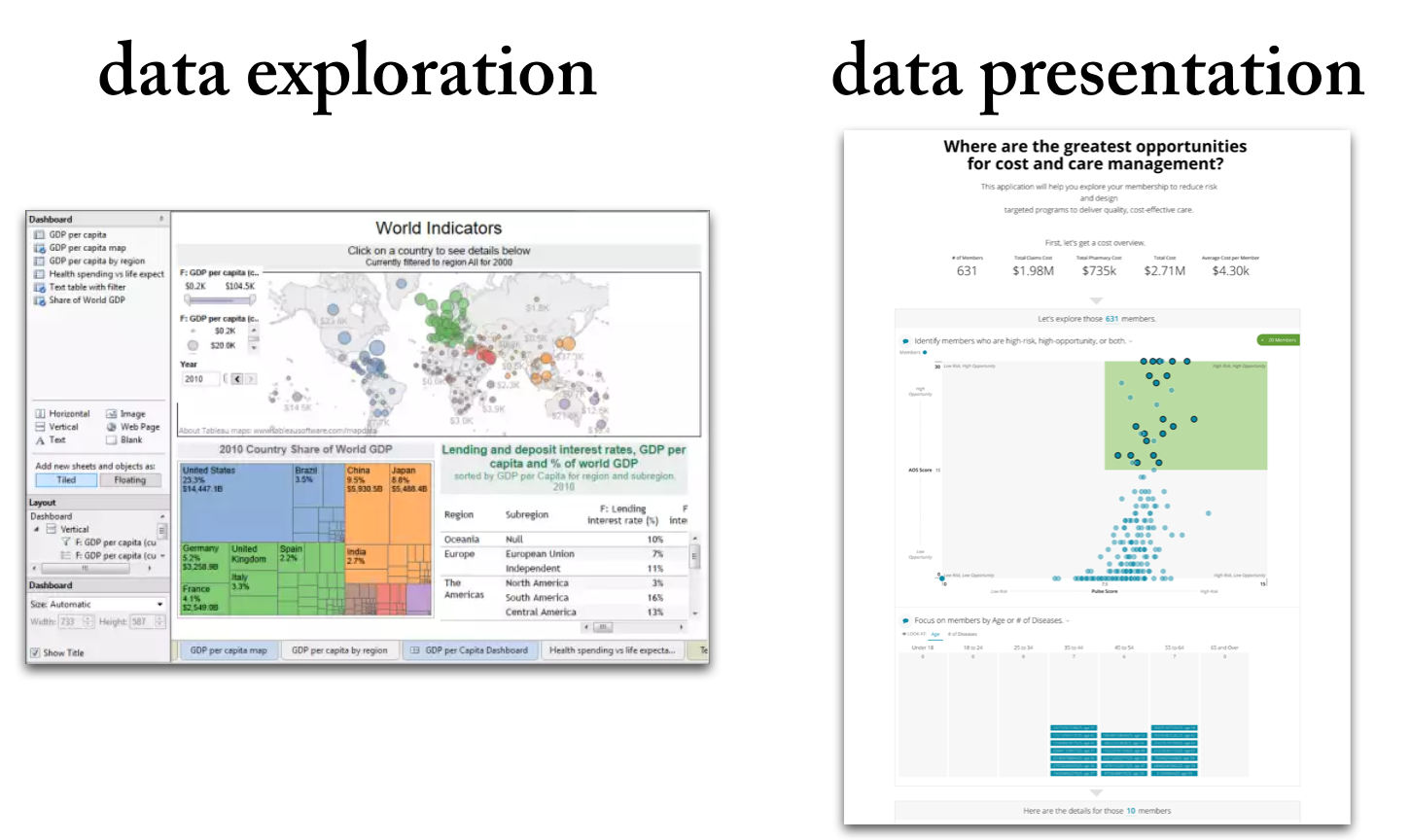
- Fit style to the story. After trying pure Lessig, I wondered whether we were trying to force a style on a presentation that needed something different? Maybe each presentation – and even parts of presentations – have a best approach for imparting the information. Remember when MSFT had presentations "starter packs" that would build a 15 page presentation for you with stubs on different pages? Interesting that the content varied for the different presentation objectives, but the presentation style/approach didn't! The default style in PowerPoint becomes the "right way" even if it isn't.A better way to present is to consider the characteristics of the information. High-level, conceptual points may be well-suited to a single word, phrase or picture. In contrast, a rich display of data can be equally compelling if you need to impress the audience with your homework and deliver a foundation to support your case. We have even started to experiment with using separate handouts with the important raw data to supplement a sparse, story-telling style of presentation.
Coming Soon....
By Chris Gemignani
October 14, 2005
Find more about:
analytics
excel
googleearth
mapping
pivottables
We’ve received a lot of positive response from the webcast as well as requests to show how it’s done. We’re working on an webcast demonstration to show how it’s done and hope to have it posted in a few weeks.
This will be part of a trio of tutorial webcasts that we will be releasing this year.
- Heatmapping Google Earth with Django: How to connect geographic data to Google Earth.
- Massively multiplayer customer analytics: How to create a visual view of your customer base using large multiples of itty-bitty picutres.
- Data-Transform-Present: How to create dynamic dashboards in Excel by using a master PivotTable to drive slave PivotTables.
Stick around.
1 comment
Hari Jayaram said:
I could not locate the flash screencast for doing heatmaps in google earth on the Juice analytics blog. Can someone tell me the correct URL
Add a comment
Heatmapping Google Earth
By Chris Gemignani
October 10, 2005
Find more about:
analytics
django
googleearth
screencast
In last week's post, we spoke of building a toolchain that makes it easy to develop Google Earth overlays of customer data.
In this screencast (now with audio!), we've taken fictitious customer data and developed a Django application that allows us to manipulate dynamic heatmaps of customer locations. This is all done with just a few hundred lines of Python code.
The roadmap to discovering value in your corporate data is seldom clear. It helps to push and prod, pull and stretch the data in a search for insights. Ad-hoc data mash-ups like this one open the door for new creativity and insights.
3 comments
Ogle Earth said:
The blog of consulting company Juice Analytics has a post up with a very neat screencast showing off a dynamically generated heatmap for Google Earth, via a network link served using the Django programming language. It's somethng I haven't seen...
Srinath Vangari said:
HI Guys,
I have seen some stuff using django for rendering heat maps on google maps, few days back. But now i cannot find that stuff. I am doing the similar stuff for my project, Can you guys, provide me some of the inputs or pointers for rendering the heat maps on google map using DJango.
Please reply.
Eric Wallace said:
The URL of the screencast does not work.
Add a comment
Building the Geotoolchain
By Chris Gemignani
October 7, 2005
Find more about:
analytics
django
googleearth
mapping
We try to create simple tools to visualize our client’s data and flexibly expand them as business demands and information grows. One dimension of customer location that often gets overlooked is geolocation. Microsoft MapPoint and ArcGIS have made the ability to overlay different forms of business data. But they’re relatively expensive, complex and not exactly agile.
The question is how to open up geographic business intelligence to not just a few people in the organization, but to all.
Enter Google Earth. Below are crime rates in Portland, Oregon courtesy of Portland Maps.
The folks at Portland Maps are steps ahead of the rest of the Google Earth community with their visualization of Portland area information. What they’re doing is not just displaying points in a map, but processing those points to show density heatmaps. It’s easy to see how useful this could be to the real estate industry or anyone thinking of moving to the Portland area.
Webservices have made geocoding cheap and accessible. The challenge is to create tools for rapid data access and development. That’s why we’re excited about powerful development frameworks like Django. All the pieces are there; geocode your customer information, process and serve it through Django, and democratize visualization in your organization using Google Earth.
We’re working on a screencast that shows how we remixed these tools into a toolchain that provides real geographic insight.
Introducing Slices
By Chris Gemignani
October 6, 2005
Find more about:
juice
We’ve got a logo now thanks to Inkscape and a bout of creativity. Introducing “the slices”.

For a long time we were held up due to a compulsion to create a logo with meaning. Here’s what works for us about “the slices”.
- looks like a “J”
- juice = fruit = orange = slices
- slices = thin slicing = data dimensions = draw your own conclusion here
- at the intersection of the two slices looks like a droplet… of juice
- calling it “the slices” is delightfully big-company branding pretentious
- the faceted intersection of the two slices looks like a gem, which holds special meaning to the principals
Here’s the slices with Juice Analytics overlaid on top.

Rebranding of the website will happen when we get a round tuit. We’ve been battling comment spammers and our current blogging framework (PHP based BBlog) doesn’t have a lot of options to help, so we’ll rebrand, rehost, and change frameworks (WordPress, anyone?) in the next few months.
1 comment
Juice Analytics » Blog Archive » It’s here, it’s clear! said:
[...] We’ve just updated our website and blog with our new logo (mmm, slices), a new blogging engine (Wordpress 2.0) and a new look. The redesign in particular was inspired by TextDrive, which has some of the best typography I’ve seen on the net and a terrific clean aesthetic. [...]
Add a comment
Absolutely Google Earth - Complete Tool Collection
By Chris Gemignani
October 5, 2005
Find more about:
googleearth
mapping
Google Earth can be a powerful tool for geographic business analysis. Here are some resources. We’re going to keep updating this page as new tools roll in.
Reference
- Google Earth Home Google Earth Homepage and download area
- Google Earth KML 2.0 Documentation In depth documentation of the features of KML 2.0
- Google Earth KML 2.0 Tutorial Tutorial for newcomers to KML and Google Earth.
- Google Earth Community Official Google Earth Forums with topics ranging from sightseeing to development. Monitored frequently by staff of knowledgable administrators.
- Google Earth WikiPedia Entry Wikipedia Entry on Google Earth
- KML Wikipedia Entry Wikipedia Entry on KML
KML Generation/Translation
- GPS Utility by GPS Utility, Easy-to-use application that manages and manipulates GPS data. Now with Google Earth support.
- KML Home Companion for ArcGIS posted 9/14/2005 by Jim Cser, Converts ArcGIS (http://www.arcgis.com)layers into Google Earth KML files.
- Arc2Earth by Brian Flood, ArcGIS to Google Earth converter with emphasis on converting much of the rich map annotations from ArcGIS to KML
- Microsoft Flight Simulator:Google Earth Translation keeps Google Earth view in sync with Flight Simulator
News & Information
- Google Earth Blog – Frequently updated blog related to Google Earth
Analytics
- Portland Maps – Excellent example of the analytical possibilities of Google Earth
- EarthPlot – a data analysis and visualization tool that processes CSV files into KML overlays
Overlays
- Google Earth Hacks Downloads Collection of Google Earth overlays
- Colorado Real Estate filter and view homes for sale in Colorado in Google earth, generates static kml file w/ embedded pictures of each house.
6 comments | Show all comments only the last 5 are shown
Darren Cope said:
Don't forget Brian Flood's "Arc2Earth" at http://www.spatialdatalogic.com/cs/blogs/brian_flood/archive/2005/09/12/98.aspx
Chris Gemignani said:
Thanks Darren.
Rick.Stavanja.com said:
http://rick.stavanja.com/archive/2005/10/10/4626.aspx
Fabrizio Pivari said:
csv2map: csv to Google Earth and Google Maps api batch server converter
DeafScribe said:
Not sure this is the appropriate place to mention it - point me to another if you know of a better one - but one mashup I'd love to see is data from satellite passes available from heavens-above.com rendered in GE. I know there are layers available that show a variety of satellites in orbit, but Heaven's Above has the latest elsets, so the data is up-to-date. One could, among other things, activate a layer that shows the sun/shadow termination line and see how the satellite pass moves through it from various angles, or check the ground track...lots of possiblities.
KaMeLwriter said:
Something new - use hierarchical maps (Mindmaps) to create KML and link in Excel data.
Add a comment
Sneek peek at life without the bullet
By Chris Gemignani
October 3, 2005
Find more about:
powerpoint
presentations
Dick Hardt gives a brilliant presentation at OSCON 2005 that showcases the possibilities of digital presentation and shows that you can present without the bullets.
If your job requires you to get in front of a group of people with a PowerPoint deck, you owe it to yourself to at least sneak a peek at this alternative approach to presenting.
What I find exciting about this is it’s not rocket science. Dick simply has a well honed story to tell. For all intents and purposes, he could have even built that story using a standard PowerPoint deck (I know he didn’t, but that’s not the point). Once he had his story, he just threw out traditional approaches and build a deck that relentlessly serves the needs of his story in each and every moment.


0 comments | Add a comment
said: